3 Ways To Reduce Inventory Shrinkage 9

Essential Inventory Management Strategies: How to Reduce Shrinkage, Improve Accuracy, and Optimize Stock Levels

You shouldn’t have to check every shelf to know when to reorder. Inventory software can alert you when stock runs low, generate reorder reports automatically, and even trigger a purchase order. Go over them with staff during training and post them in key areas like stockrooms or loading bays. Also, track them with barcodes, RFID tags, or other inventory tagging systems to know their status. With it, you can see what’s in stock, where, and how it moves.

3 Ways To Reduce Inventory Shrinkage

Calculate Inventory Shrinkage Rate

These effective measures include improving your security measures and inventory management strategies. It might result from employees damaging items in the warehouse or customers damaging them in stores. It may even be a result of bad weather (flooding) or other factors you can’t control.

Out of those 200 units, they sell 180 but then fail to find the other twenty. It’s missing inventory that a business purchased but can’t sell for various reasons, which we’ll go into more detail later. Now that we’ve established the significance of preventing inventory shrinkage, it’s time to explore some proactive strategies to safeguard your stock.

Damages

If you haven’t already done so, make sure to create clear guidelines for the receiving process. Implementing redundancies in the receiving process will help create so-called “safety nets” in case one check fails to catch a mistake. Conduct comprehensive background checks before doing business with them and establish clear receiving protocols. Consider investing in anti-theft systems like Electronic Article Surveillance (EAS) and Radio Frequency Identification (RFID) tags. Now subtract total inventory in the stock from inventory mentioned in the books.

Impact on Pricing

  • These perpetrators can range from casual, one-time offenders to organized criminal groups.
  • This reduction in inventory not only affects your stock levels but also adds costs for markdowns or disposal which will further hurt your business’s profitability.
  • In the world of logistics and supply chain management, efficiency is key.
  • Ecommerce business owners are all too familiar with the challenges of inventory shrinkage.
  • Ready to get your business organized and do more to prevent inventory shrinkage?
  • The best way to deal with inventory shrinkage is to prevent it before it happens.

However, the scope of reducing the temperament of carelessness can turn the wheel around to reduce Inventory shrinkage. There are a lot of ways in which a business can save the cost of inventory shrinkage. Simply curate the right tricks and rules and implement some in the business. It is vital to understand the major causes of inventory shrinkage to reduce the inventory shrinkage rate. It is also vital to curate measures to rectify the causes of shrinkage. If you can’t find where else shrinkage may be occurring, it’s worth looking at your management system.

Disrupted Inventory Turnover

Businesses typically notice inventory shrinkage during year-end inventory counts when they realize that accounting’s inventory records do not match reports from the physical audit. Inventory mismanagement doesn’t always come from theft or damage—it often comes from poor planning. Setting minimum and maximum stock levels helps businesses maintain an ideal inventory balance, ensuring they don’t run out of critical products while also preventing overstocking. Additionally, automation helps businesses detect unusual inventory activity.

Step 2: Data Consolidation and Integration

The more organized your inventory system is, the easier it will be to detect when something has gone awry with your stock levels. Additionally, ensure that your staff understands the importance of staying organized. This will significantly reduce inventory loss due to human error or negligence.

  • In some cases, significant inventory shrinkage can lead to compliance issues, especially for public companies that must report accurate financial statements.
  • Reporting errors, data input errors, and problems reconciling the accounts contribute to administrative inventory shrinkage.
  • Unlike these known losses, shrinkage usually indicates a problem in your inventory control process.

The acceptable level of shrinkage is less than 1%,  but many companies experience much higher levels. Here is the industry formula for calculating your inventory shrinkage rate. This system not only helps catch errors but also serves as a deterrent to potential theft or fraud. It’s an excellent way to identify stages in the inventory management process where discrepancies are most likely to occur. Shoplifting and organized retail crime contribute significantly to inventory shrinkage.

One of the main culprits contributing to inventory shrinkage is warehouse theft. In fact, 42.7% of inventory shrinkage is attributed to employee theft. So, as much as we’d like to trust every employee, the truth of the matter is that warehouse theft can and will occur. Effective communication among teams is essential for a proactive shrinkage reduction strategy. Tools 3 Ways To Reduce Inventory Shrinkage like Team Chat allow for streamlined collaboration, ensuring that all relevant departments—from procurement to inventory management—stay in sync.

Stages in GOP in Make-In-Order Production

3 Ways To Reduce Inventory Shrinkage

Security checks should be a non-negotiable concept when it comes to inventory. The warehouse or the retail outlet should be covered with a web of CCTV cameras. The products can be pinned with tracking devices if limited in numbers. Anti-theft alarms can be placed at the security check along with a manual checking process. First, calculate your inventory shrinkage value by subtracting actual inventory from recorded inventory. Divide that shrinkage value by your recorded inventory value and multiply by 100.

Overcoming these hurdles requires not only investment in technology but also a cultural shift in the way pharmacies approach data management. Building a robust ecosystem that combines smart software with trained professionals is key to reducing losses effectively. Calculating inventory shrinkage is critical to determining shrinkage cost and formulating strategies to mitigate it.


54 Payroll Checks Ideas 9

Resource 9 Often Overlooked Payroll Checks Made Easy by PaidRight

Performing audits thoroughly ahead of the new calendar year is considered a best practice to avoid last-minute surprises. This article is a comprehensive guide to common payroll forms, their key elements, benefits, and how to use them. It explains the importance of using the correct payroll forms for accurate payroll processing and compliance with federal, state, and local tax laws. A human resources department of a large corporation uses an electronic payroll check template to issue payments to their employees.

Submit tax payments to appropriate agencies

54 Payroll Checks Ideas

If you fail to meet payroll tax deadlines or submit incorrect filings, you can face penalties, audits, or even legal action. For instance, businesses paid nearly $10 billion in civil penalties to the IRS in 2023 due to payroll tax issues, including late fees, fines, and overdue tax payments. This article emphasizes the importance of accurate payroll management and explains how payroll report templates can help streamline the payroll process. It covers the benefits, types, customization, maintenance, and essential elements of these templates, and offers tips for accurate record-keeping. The article also stresses the significance of staying up-to-date with payroll-related regulations and investing in reliable payroll software. Payroll check templates help ensure that employee paychecks are accurate with the necessary information, reducing the risk of errors and ensuring that employees are paid correctly.

Real Benefits for Your Business and Team

For instance, if you need to request payroll records for a payroll processing project, you simply set up the client task request list within the payroll processing project in Financial Cents. Periodic payroll audits can help identify discrepancies and improve processes. Review pay calculations, tax filings, and deduction records to ensure they align with the information provided by clients.

Additional Options

Printable payroll check templates are designed to be printed on standard paper and filled out by hand. This type of template is typically used by small businesses that don’t have access to electronic payroll systems or those who prefer manual record-keeping. In summary, a payroll checklist simplifies the process and ensures that every payroll run meets the highest standards of accuracy and compliance. This article highlights the significance of conducting payroll audits to maintain accurate, compliant, and efficient payroll systems.

  • Running a business means staying on schedule, and any delays in check processing can be costly.
  • Its purpose is to create a clear, repeatable process that ensures accuracy, compliance, and efficiency.
  • In it, we provide a payroll checklist that simplifies payroll management for you, whether it’s for clients or for internal use.
  • Performing audits thoroughly ahead of the new calendar year is considered a best practice to avoid last-minute surprises.

Clear Pay Details:

  • The months leading up to the big day are filled with decisions, tasks, and deadlines.
  • From verifying employee information and collecting tax forms, to calculating payroll taxes and coordinating with your payroll provider, every step matters.
  • If your company’s payroll system needs improvement to become more effective and efficient, the payroll enhancement ideas shared in this article are worthy of your consideration.
  • Zil Money puts professional payroll check printing within reach for businesses of all sizes.
  • A payroll check is a check issued by the employer to its employees as compensation for their work.
  • The article emphasizes the importance of continuous improvement to ensure ongoing compliance and identify potential issues before they become significant problems.

When processed accurately and on time, it boosts employee satisfaction, motivation, and retention. Payroll management isn’t just about sending out paychecks anymore—it’s about getting every detail right, moving money… StockChecks opened in 2013 with the idea of providing quality checks and forms, quickly, efficiently and inexpensively. Every business has unique preferences when it comes to payroll documentation. That’s why we offer a variety of check styles and colors to match your branding or internal requirements.

Payroll should be reviewed after every processing cycle to ensure immediate accuracy, but a full audit should be scheduled quarterly and at year end. As business size grows, increasing review frequency becomes a best practice. This is especially important after significant changes such as shifts in employee counts or benefits programs, helping businesses stay prepared for a seamless new calendar year. Payroll might seem like numbers and deadlines on the surface, 54 Payroll Checks Ideas but behind every transaction is a person relying on you to get it right. The downside here is that having multiple pay cycles creates more administrative work for the payroll personnel.

Payroll processing checklist: Step-by-step

You can use the Client Tasks feature in Financial Cents to easily request information from clients and set up automatic follow-ups to ensure they provide it before the deadline. These benefits combine to save you time, money, and stress—while making your team feel valued. It might get quite hard to find your way out of the many International Payroll solutions. Fear no more, with our selection of the 10 best services, our pieces of advice and a comprehensive guide, you’ll find the best one for your company. The months leading up to the big day are filled with decisions, tasks, and deadlines. Even in today’s digital age, many companies still use paper checks and mail them out to their workers at least once a month.

Zil Money puts professional payroll check printing within reach for businesses of all sizes. For questions or bulk order inquiries, contact our team—we’re here to help you find the best payroll check solutions for your business. That’s why we offer free, same-day shipping on most orders placed before 12 PM ET, Monday through Friday. This ensures that your checks arrive quickly, allowing you to meet payroll deadlines without unnecessary delays. Payroll fraud is a significant concern for businesses, and we take every precaution to protect against unauthorized alterations.

The template is integrated with the company’s payroll software and includes all necessary payment information, as well as options for direct deposit and electronic signatures. A small business owner uses a customized payroll check template to issue paychecks to their employees. The template includes the business’s logo and branding colors, as well as all necessary payment information, such as gross pay, taxes withheld, and net pay. Finally, double-check every total before proceeding to delivery method execution.

If your company’s payroll system is currently in disarray, it is best to consult an HR outsourcing firm for appropriate payroll solutions. In the meantime, this article shares some payroll enhancement ideas that every business should consider adopting. Payroll is more than just paying your team—it’s a chance to show respect and build loyalty. When you print payroll checks with personalized branding and messages, you’re telling your employees they matter. Every business owner knows that happy employees are the backbone of success. One simple, often overlooked way to boost team morale is to print payroll checks.

Financial Ratio Analysis: Definition, Types, and Formulas

how would you characterize financial ratios

Using this ratio, investment banks https://www.superiortla.com/mastering-cash-disbursement-your-ultimate/ can evaluate if a company is using its assets in the most effective way possible. For commercial banks, understanding a potential borrower’s financial standing and overall risk is key. Lending to a company already leveraging high amounts of debt can be too risky for a commercial bank. As a result, the debt ratio is an important and routinely used ratio by commercial banks. At this point, you may be wondering how these ratios are used and who’s using them.

how would you characterize financial ratios

Interest Coverage Ratio

Current Assets are those converted into cash within one accounting cycle. On the Balance Sheet (BS) the items are listed from the most liquid (cash) to the least liquid (inventories and prepaid expenses). For example, companies such as Burger King will have a ratio as high as 1.5, while companies such as Wal-Mart as low as 0.3. The same scenario applies since the local bank will assess your credit score before approving the overdraft. Horizontal integration is a strategy where a company acquires, merges with or takes over another…

Calculating the Ratios Using an Amount from the Balance Sheet and the Income Statement

Picture a kirana shop in Chennai that keeps its shelves stocked with fast-moving items—atta, oil, Maggi. In short, efficiency ratios reveal whether a company is running like a tight kirana shop or a chaotic godown. Alright, we’ve talked about how profitable a company is and how wisely its leaders are using capital. Now let’s zoom in and see how well the company is handling day-to-day operations.

  • They help small businesses manage debt responsibly and signal financial health to potential investors.
  • This article summarized all of the most commonly used ratios and metrics in financial analysis.
  • While many companies take on debt to finance growth, it is important to calculate the company’s earnings in comparison with its debt to avoid making risky investments.
  • However, purchasing shares of its own stock does reduce the corporation’s cash available to meet future obligations including unforeseen problems.
  • This tells you how much profit you make from operations, before interest, taxes, and depreciation.
  • By understanding and interpreting financial ratios, you can make more informed decisions whether you are an investor, analyst, or business owner.
  • Clearly, the gradesassigned are somewhat subjective, but perhaps useful, insummarizing a great deal of financial information.

Section 3: Efficiency Ratios – Is the Company Running a Tight Ship?

A higher earnings yield suggests an undervalued stock, while a lower yield may indicate overvaluation. Companies with high DIO may face excess inventory issues, leading to increased storage costs and potential markdowns. We measure the trend in NWC bycalculating the change in NWC between calendar years. In the case of HQN, every dollar of accountspayable produced 9.33 dollars in accrued COGS. Interpreted, each dollar of equity generatedabout $0.085 in before-tax profits and $0.051 in after-tax profitsduring 2018. Interpreted, each dollar of HQN’s assetsgenerates $.065 cents in before-tax profits.

  • For instance, a net profit margin of 10% implies that the company retains 10 cents as net profit for every dollar of sales.
  • Many “analysts” and “investors” are deceived by the use of the valuation ratios.
  • This ratio indicates how well you’re managing your day-to-day operations and controlling costs.
  • This ratio measures how well the company is utilizing its assets to create revenue.
  • The duration of this collection period is extremely important because a longer collection period can put significant strain on the firm’s cash flow.

how would you characterize financial ratios

The dividend yield represents the return an investor can expect from dividends relative to the current how would you characterize financial ratios stock price. It’s a critical ratio for income-focused investors who rely on dividends as a source of income. A higher net profit margin indicates better overall profitability and operational efficiency. Financial ratios formulas like this are vital when assessing liquidity and short-term stability.

how would you characterize financial ratios

how would you characterize financial ratios

Amidst the cacophony of stock tickers, quarterly reports, and economic indicators, market ratios emerge as essential tools for understanding a company’s financial health. These ratios serve as a bridge between raw financial data and actionable insights, allowing investors to make informed decisions. Earnings per Share measures the profitability of a company on a per-share basis.

Solvency ratios analyze a company’s long-term financial stability and its ability to meet long-term debt obligations. The debt-to-equity ratio, interest coverage ratio, and debt balance sheet ratio are commonly used solvency ratios. These ratios help stakeholders assess a company’s leverage and its capacity to handle debt. Profitability ratios assess a company’s ability to generate profits in relation to its revenue, assets, or equity. The gross profit margin, net profit margin, and return on assets (ROA) are some of the key profitability ratios. These ratios help stakeholders understand how efficiently a company is utilizing its resources to generate profits.

Applying Industry Research: Market Sizing

how would you characterize financial ratios

Efficiency ratios measure how efficiently assets and liabilities are being managed. This ratio should tell you how much money a company has left over to pay  interest. It’s often used by banks to determine whether a loan should be approved, because it indicates if  a company likely has enough money to pay back its debt, plus interest. The operating margin ratio is a key indicator for how well a company can earn profits from its core product or service offering.

Explaining Asset Life Cycle and Its Organizational Structure to R

fixed asset accounting process

In contrast, the declining balance method accelerates depreciation, recognizing higher expenses in the earlier years of an asset’s life. This approach is beneficial for assets that quickly lose value or become obsolete, such as technology equipment. By applying a fixed percentage to the book value of the asset fixed asset accounting process each year, this method reflects the rapid decline in utility and market value.

The two main purposes of an asset class are:

It sets aside the money you expect to spend on an asset as it wears out or loses its value over time. The amount that you set aside for depreciation is called the depreciation allowance. When you track the life of your fixed assets, you should consider how long you plan to use each purchase. Two primary methods for tracking fixed assets are straight-line depreciation and accelerated depreciation. Fixed asset accounting is a method of accounting for assets such as buildings, machinery, vehicles, and computers.

  • For example, if a piece of machinery is expected to produce 100,000 units over its life and costs $100,000, the depreciation expense per unit would be $1.
  • This detailed information is also used in the asset history sheet, as part of the annual financial reporting.
  • This ratio gives visibility into how old an organization’s fixed assets are.
  • ASC 360 requires annual impairment analysis for all long-lived assets to test for significant changes in an asset’s fair market value and if the costs related to the asset are recoverable.
  • In addition to the actual costs, you should also include the price amount for a specific period.
  • Discover how RFID transforms refrigeration plants with real-time traceability, expiration control, and automation in cold storage environments.
  • Beyond formal education, practical experience in accounting is highly beneficial.

Have a Clear Understanding of Your Assets – Best Practices For Fixed Asset Accounting

fixed asset accounting process

CA represents the amount paid for the asset, while depreciation represents the gradual reduction in the asset’s value over time. Fixed assets with a life expectancy over one year depreciate using an accelerated double-declining balance technique. It is essential to have sound practices in place to ensure accurate and timely reporting of assets and effective financial control. Therefore, it is essential to track the value of fixed assets over time to ensure that they are adequately maintained and valued. Considering fixed assets are used in regular business workflows and operations, they are susceptible to wear and tear, thus losing their value over time.

fixed asset accounting process

Asset Management for the Food Industry: Why is it so important for this sector?

fixed asset accounting process

Fixed asset accounting refers to the action of recording an entity’s financial transactions for its capital assets. For organizations reporting under US GAAP, ASC 360 is the appropriate accounting standard to follow. For most organizations, fixed assets are a significant investment and must be accounted for properly. The current market price of the items usually determines the value of fixed assets. When a company purchases fixed assets, it’s said to be investing https://isabelmckay.cl/2021/03/25/what-kind-of-records-should-i-keep-internal/ in its future. Companies use fixed assets to produce products and services sold to customers.

  • This practice ensures that you stay in the loop on the current costs and value of your assets and by that—the value of your business.
  • Inaccurate data can lead to financial misstatements and compliance issues.
  • For example, a company can use its fixed asset accounting policy to determine whether or not it needs to purchase new equipment.
  • This method ensures that the expense recognition is closely aligned with the asset’s productivity.

IoT devices can further enhance this by collecting and transmitting data on asset performance, enabling predictive maintenance and reducing downtime. By leveraging these technologies, organizations can optimize their asset management processes, ensuring that their fixed assets are income summary utilized effectively and efficiently. Accurate asset valuation is a cornerstone of effective fixed asset management, providing a clear picture of an organization’s financial health. Initial valuation typically involves recording the purchase price of the asset, including any costs necessary to bring it to its intended use, such as installation and transportation fees.

  • It is intended for long-term use and can be identified individually in the balance sheet.
  • The reinvestment ratio is calculated by dividing capital expenditures by depreciation.
  • This method calculates depreciation based on the number of units produced or hours operated, providing a more accurate reflection of the asset’s consumption.
  • The current market price of the items usually determines the value of fixed assets.
  • Understand how impairment affects hospital assets and learn how to prevent accounting losses through accurate valuation and strategic asset management.

horizontal and vertical analysis 3

Horizontal vs Vertical Analysis for Financial Statements

The figure below shows the complete horizontal analysis of the income statement and balance sheet for Mistborn Trading. While vertical analysis offers advantages such as easy comparison and trend identification, it also has limitations related to its inability to measure profitability and reliance on accurate data. If you work in corporate finance, you need to know how to analyze financial statements to horizontal and vertical analysis evaluate the performance and position of a company. Two common methods of financial statement analysis are horizontal and vertical analysis. In this article, you will learn what they are, how they differ, and when to use them.

Similarities Between Horizontal And Vertical Analysis

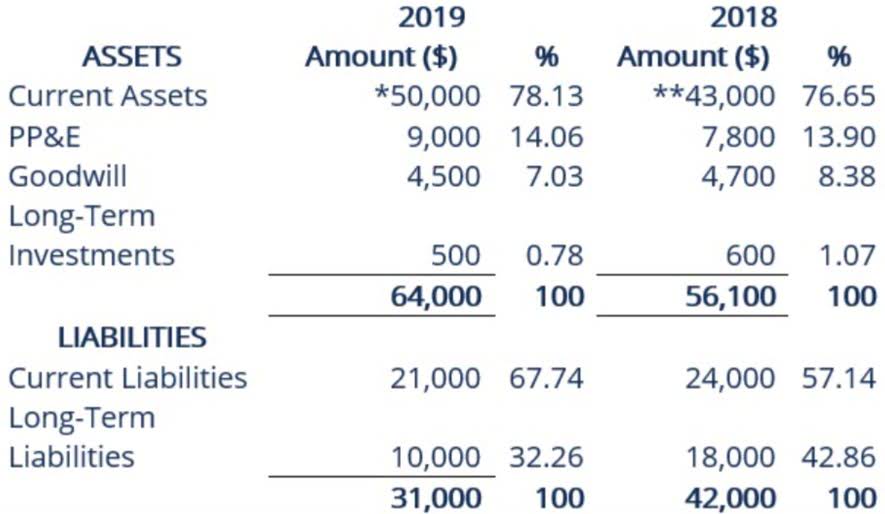
Financial statements that include vertical analysis clearly show line item percentages in a separate column. Vertical analysis expresses each line item on a company’s financial statements as a percentage of a base figure, whereas horizontal analysis is more about measuring the percentage change over a specified period. Two of the most common types of analysis are horizontal analysis and vertical analysis, with both offering clarity of the financial performance of a business by examining a company’s financial statements.

Detailed Techniques for Implementing Horizontal Analysis

Using horizontal analysis, you’re comparing results from one time period to another. At the bottom of the analysis, note that net income, as a percentage of sales, declined by 2.62 percentage points (6.67 percent to 4.05 percent). Management should consider both the percentage change and the dollar amount change. To illustrate the practical application of horizontal and vertical analysis, let’s consider a case study of a hypothetical company, XYZ Inc. For example, the amount of cash reported on the balance sheet on Dec. 31 of 2024, 2023, 2022, 2021, and 2020 will be expressed as a percentage of the Dec. 31, 2020, amount. Examples include inventory turnover ratios and accounts receivable turnover ratios.

Common Size Financial Statements: Applications and Benefits

The following figure is an example of how to prepare a vertical analysis for two years. As with the horizontal analysis, you need to use more years for any meaningful trend analysis. This figure compares the difference in accounts from 2014 to 2015, showing each account as a percentage of sales for each year listed. Vertical analysis restates each amount in the income statement as a percentage of sales.

Valuation Ratios Every Investor Should Know

It is important for businesses to understand the attributes and benefits of each analysis method and choose the most appropriate approach based on their specific needs and objectives. By leveraging the power of both horizontal and vertical analysis, organizations can gain a comprehensive understanding of their financial health, identify areas for improvement, and drive sustainable growth. Vertical analysis also allows for the identification of trends within specific line items. By comparing the percentage composition of different periods, businesses can assess changes in the relative importance of various components.

The following figure is an example of how to prepare a horizontal analysis for two years. For useful trend analysis, you need to use more years (most investors use five), but this example gives you all the info you need to prepare a horizontal analysis for an unlimited number of years. Horizontal analysis is the comparison of historical financial information over a series of reporting periods. It is used to see if any numbers are unusually high or low in comparison to the information for bracketing periods, which may then trigger a detailed investigation of the reasons for the difference. From this table, we can observe that revenue has consistently grown over the years while expenses have also increased but at a slower rate.

Horizontal analysis and vertical analysis are two common methods used in financial statement analysis. Horizontal analysis involves comparing financial data over a period of time, typically multiple years, to identify trends and changes in performance. It helps to assess the growth or decline of specific line items such as revenue, expenses, or net income.

horizontal and vertical analysis

What is Horizontal Analysis and How is it Different From Vertical Analysis?

  • This means Mistborn Trading saw an increase of $20,000 in revenue in the current year as compared to the prior year, which was a 20% increase.
  • However, it’s important to note that while horizontal analysis focuses on year-to-year performance, it does not provide information on overall financial structure or efficiency.
  • Vertical and horizontal analyses are two fundamental techniques used in this process.
  • For example, if Mistborn Trading set total assets as the base amount and wanted to see what percentage of total assets were made up of cash in the current year, the following calculation would occur.
  • It shows each item as a percentage of a total figure, like revenue, to understand financial statement proportions at a point.
  • Metrics such as the debt-to-equity ratio and interest coverage ratio are central to this analysis.

Based on trend analysis, however, these expenses are actually declining as a percentage of sales. Initial gross profit ratio calculations seemed to indicate little variation, and thus little effect on income from operations. The increase in cost of goods sold (78% vs. 77% of sales) may warrant further investigation. The article horizontal vs vertical analysis looks at meaning of and differences between two ways of analyzing financial statements – horizontal analysis and vertical analysis. Horizontal analysis also allows for the identification of anomalies or outliers in financial data. Sudden spikes or drops in specific line items can be investigated further to understand the underlying causes.

Look no further, as we delve into the world of vertical and horizontal analysis. These two methods are widely used by professionals like yourself to gain valuable insights into a company’s financial statements. Financial analysis is crucial for business decision-making, and vertical and horizontal analysis are essential tools for understanding a company’s financial performance. Besides, finance professionals involved in financial planning, investment analysis, or corporate finance must deeply understand both analysis methods. Emeritus offers online finance courses to help finance professionals deepen their vertical and horizontal analysis knowledge and enhance their skills.

London Business School Executive Education

  • However, vertical analysis may not reflect the true value of the financial elements of a company, as it does not consider the quality, quantity, or timing of the financial data.
  • Often expressed in percentages or monetary terms, it provides insights into factors that significantly affect the profitability of an organization.
  • For example, by comparing revenue growth over the past five years, a company may identify a consistent upward trend, indicating a healthy business trajectory.
  • Vertical analysis focuses on the internal structure of financial statements, expressing each item as a percentage of a base figure.
  • But financial reporting alone doesn’t provide the information gained from completing financial statement analysis, which is essential for understanding the nuances of your company’s financial health.

Vertical analysis provides a different look at your financial statements, with each line item on your financial statement listed as a percentage of the established base figure. For a horizontal analysis, you compare like accounts to each other over periods of time — for example, accounts receivable (A/R) in 2014 to A/R in 2015. Trends or changes are measured by comparing the current year’s values against those of the base year. While both vertical and horizontal analysis provide valuable insights into financial performance, they are also considerably different. Suppose we’re tasked with performing a horizontal analysis on a company’s financial performance from fiscal years ending in 2020 to 2021. Horizontal and vertical analysis techniques provide distinct yet complementary perspectives on financial data.

7: Horizontal and Vertical Trend Analysis

On the other hand, horizontal analysis enables you to evaluate a company’s performance over multiple periods. By comparing key financial figures side by side, it becomes easier to spot any significant changes or fluctuations that may impact decision-making. Financial analysts use a broad range of techniques that are collectively known as ratio analysis. There are hundreds of financial ratios employed and even different methods of calculating the same ratios. For this reason, ratio analysis is considered to be more of an art than a science. As a result, some companies maneuver the growth and profitability trends reported in their financial horizontal analysis report using a combination of methods to break down business segments.

home office tax deductions for small business

25 Small Business Tax Deductions You Can Claim in 2025

Consider keeping a detailed log of business calls to substantiate this deduction. Alternatively, if you have a separate phone line solely for business use, you can deduct the entire cost of that line. Taking the home office deduction using the regular method could prevent you from qualifying for this exclusion. If you sell your home after taking the home office deduction, there are important considerations regarding capital gains tax and depreciation. Let’s say you own a construction company and spend much of your day at worksites.

For more information on economic performance, see Economic Performance under Accrual Method in Pub. You can account for business and personal items under different accounting methods. For example, you can figure your business income under an accrual method, even if you use the cash method to figure personal items. Generally, the SSA will give you credit only for self-employment income reported on a tax return filed within 3 years, 3 months, and 15 days after the tax year you earned the income.

Interest and Dividend Income

For calendar year 2024, Form 1040 or 1040-SR is due by April 15, 2025. If you use a fiscal year (explained in chapter 2), your return is due by the 15th day of the 4th month after the end of your fiscal year. If you file late, you may have to pay penalties and interest. Depending on the provider and the specific services requested, a fee may be charged. To find an authorized IRS e-file provider near you, go to IRS.gov/Efile/Providers.

Can I take the home office deduction as a work-from-home employee?

  • If you use either or both optional methods, you must figure and pay the SE tax due under these methods even if you would have had a smaller tax or no tax using the regular method.
  • For example, if you allow an employee to use a car or other property you lease, deduct the cost of the lease as a rent or lease expense.
  • Launching a new business often involves significant upfront expenses.
  • If you work from home, you may be able to write off a portion of your internet from your business expenses.
  • Therefore, for 2024, if you had income (self-employment and wages) of $6,920 that was subject to social security tax, you received four credits ($6,920 ÷ $1,730).

So, if your annual property tax bill is $5,000, you could deduct $500 (10% of $5,000) as a business expense related to your home office. Home office tax deductions can provide valuable tax savings for business owners, but they must be claimed correctly. We can help you determine if you’re eligible and how to proceed. The optional methods may be used only to figure your SE tax. To figure your income tax, include your actual earnings in gross income, regardless of which method you use to determine SE tax. After figuring your business income and expenses, you are ready to figure the net profit or net loss from your business.

home office tax deductions for small business

How to Document Advertising and Marketing Costs

Unfortunately, you can’t claim a studio lease or co-working space fees alongside a home office. You’re free to claim a home office one month and then a coworking membership the next — just not both in the same month. If you’re ever audited by the IRS, you’ll be prepared to back up your claims.

Home office deduction benefits eligible small business owners

You recover the costs through depreciation, amortization, or cost of goods sold when you use, sell, or otherwise dispose of the property. Promoting your business is essential, and the IRS allows small business owners to deduct advertising and marketing expenses that home office tax deductions for small business are directly related to their business activities. These deductions can help offset the costs of building brand awareness and attracting customers. Compensation and benefits provided to employees are generally deductible business expenses, reducing taxable income for employers.

home office tax deductions for small business

How to Document Startup Costs

Understanding which method works best for your situation is crucial to maximizing your deduction while staying compliant. This deduction can significantly impact your overall tax savings, but it’s essential to understand how to qualify and calculate it properly. Knowing the criteria, what expenses are deductible, and common pitfalls can help you maximize your benefits. Plain and simple, the home office tax deduction offers a valuable opportunity for small business owners to reduce their taxable income. Claiming a home office on taxes can provide substantial savings but requires careful consideration before making this decision. Direct expenses are costs that are directly related to producing goods or services.

  • A business bad debt is a loss from the worthlessness of a debt that was either of the following.
  • Remember that the requirement is that your home office is your principal place of business, not your principal workplace.
  • As a result, Ms. Zayne paid the remaining balance of the loan in full to the bank.
  • The United States has social security agreements with many countries to eliminate double taxation under two social security systems.
  • These gains and losses are called section 1231 gains and losses.

However, in some cases, you may have a gain that is not taxable or a loss that is not deductible. This chapter discusses whether you have a disposition, how to figure the gain or loss, and where to report the gain or loss. Under the uniform capitalization rules, you must capitalize the direct costs and part of the indirect costs for production or resale activities. Include these costs in the basis of property you produce or acquire for resale, rather than claiming them as a current deduction.

File

Income you report on Schedule C may be qualified business income and entitle you to a deduction on Form 1040 or 1040-SR, line 13. See Form 8995-A or Form 8995 to figure your deduction, if any. Business income includes amounts you received in your business that were properly shown on Forms 1099-NEC. This includes amounts reported as nonemployee compensation in box 1 of the form.

This deduction simply is writing off a part of your home as a business expense. House Rent Allowance or HRA forms a salary component of most of the salaried individuals. For those living in rented accommodation it can help them save tax.If you are traveling for work, you would just use the business travel deduction. The actual-expenses method might work better if the business makes up a large part of the home. The space you’re using for business must be used exclusively for conducting business.

The Basic Accounting Equation Formula & Explanation

It will become part of depreciation expense only after the equipment is placed in service. We will assume that as of December 3 the equipment has not been placed into service. Therefore, there is no expense (or revenue) to be reported on the income statement for the period of December 1-3.

Purchasing an Asset

(Some corporations have preferred stock in addition to their common stock.) Shares of common stock provide evidence of ownership in a corporation. Holders of common stock elect the corporation’s directors and share in the distribution of profits of the company via dividends. If the corporation were to liquidate, the secured lenders would be paid first, followed by unsecured lenders, preferred stockholders (if any), and lastly the common stockholders. ASC’s liabilities increased by $120 and the expense caused owner’s equity to decrease by $120.

Owner’s Equity is the owner’s share after subtracting liabilities from assets. A good plan is to reconcile accounts monthly or after big transactions. Owners should keep accurate records of equity changes, like investments or withdrawals. This prevents confusion over how much money belongs to the business or to creditors.

Bringing Financial Leadership to the Accounting Equation

accounting equation explanation

For example, John takes £150 from the cashier of his store to buy himself a shirt. Because he is taking £150 out of his company, £150 will be reduced from the equity of his company. The lenders of a business have the legal and economic rights to the assets of that business. For example, a creditor who lends money to a restaurant owner has a right, in a legal sense, to a portion of the business’ assets until the business repays its debt.

Analyzing the Accounting Equation for Financial Health and Performance

It is deferred to the next accounting period by crediting a liability account such as Unearned Revenues. Next period (when it is earned) a journal entry will be made to debit the liability account and to credit a revenue account. The accounting method under which revenues are recognized on the income statement when they are earned (rather than when the cash is received). To increase the balance in a liability or stockholders’ equity account, you put more on the right side of the account. In accounting jargon, you credit the liability or the equity account.

Joe looks at the balance sheet again and answers yes, both Cash and Common Stock were affected by the transaction. Marilyn tells Joe that accounting’s “transaction approach” is useful, reliable, and informative. She has worked with other small business owners who think it is enough to simply “know” their company made $30,000 during the year (based only on the fact that it owns $30,000 more than it did on January 1). Those are the people who start off on the wrong foot and end up in Marilyn’s office looking for financial advice. For instance, a declining owner’s equity relative to total assets might indicate financial distress, while a steadily growing owner’s equity could signal a healthy, well-performing business.

Accounting Basics Outline

This business transaction decreases assets by the $100,000 of cash disbursed, increases assets by the new $500,000 building, and accounting equation explanation increases liabilities by the new $400,000 mortgage. The equation remains balanced, showing that the company has increased its assets while taking on new financial obligations. Since there are no liabilities, all funds come from the owner’s equity, keeping the equation balanced.

Joe decides that the name for his corporation will be Direct Delivery, Inc. The attorney also advises Joe on the various permits and government identification numbers that will be needed for the new corporation. Review and reconcile accounts regularly to ensure all entries are correct.

  • The accounting equation applies universally, from sole proprietors tracking expenses in spreadsheets to multinational corporations with complex ERP systems.
  • The accounting equation, therefore, represents a holistic categorical classification of the types and classes of accounts maintained within the company.
  • Regular reconciliation keeps your records clean and your reports trustworthy.
  • The statement of cash flows (or cash flow statement) is one of the main financial statements (along with the income statement and balance sheet).
  • The accounting equation tells us that ASI has assets of $10,000 and the source of those assets were the stockholders.

Alternatively, the accounting equation tells us that the corporation has assets of $10,000 and the only claim to the assets is from the stockholders (owners). In our examples below, we show how a given transaction affects the accounting equation for a corporation. We also show how the same transaction will be recorded in the company’s general ledger accounts. Since ASC has not yet earned any revenues nor incurred any expenses, there are no amounts to be reported on an income statement. Whether you’re advising a client, preparing for an audit, or analyzing cash flow, the accounting equation gives you a clear snapshot of the company’s financial position.

  • In other words, Joe needs to match $100 of interest expense with each month’s revenues.
  • The fourth transaction occurs on December 3, when a customer gives Direct Delivery a check for $10 to deliver two parcels on that day.
  • In the coming sections, you will learn more about the different kinds of financial statements accountants generate for businesses.
  • According to the equation, the assets of the business are equal to the equity and liabilities.
  • If the corporation were to liquidate, the secured lenders would be paid first, followed by unsecured lenders, preferred stockholders (if any), and lastly the common stockholders.

«Equity Equals Market Value»

In order to earn revenues in December, the company had to incur some business expenses in December, even if the expenses won’t be paid until January. Other expenses to be matched with December’s revenues would be such things as gas for the delivery van and advertising spots on the radio. When Joe receives the $4,000 worth of payment checks from his customers on January 10, he will make an accounting entry to show the money was received. This $4,000 of receipts will not be considered to be January revenues, since the revenues were already reported as revenues in December when they were earned.

In keeping with double entry, two (or more) accounts need to be involved. Because the first account (Cash) was debited, the second account needs to be credited. Common stock is part of stockholders’ equity, which is on the right side of the accounting equation.

With HashMicro Accounting Software, businesses can simplify financial management through automated reconciliation, real-time reporting, and advanced budgeting tools. This ensures seamless financial tracking while reducing manual effort. Explore more articles about contingent liabilities to understand better how they affect financial reporting and risk management. The equation is an important concept used to assess the financial condition of the company. Accounting books, annual accounts, compulsory chartered accountants…

In short, the cost principle generally prevents assets from being reported at more than cost, while conservatism might require assets to be reported at less than their cost. Equity represents the balance remaining after settlement of obligations. Owner’s equity is a crucial metric for investors and stakeholders, as it reflects a company’s net worth and financial stability. A strong owner’s equity can signal a healthy, growing business, making it an attractive investment opportunity. For example, Apple’s consistently rising owner’s equity has contributed to its reputation as a solid long-term investment.

Return on Capital Employed Learn How to Calculate ROCE

Hence, ROCE offers clues into the financial prudency of the management team.ROCE is relevant as it gauges how efficiently a company’s resources are being utilized to extract returns. High ROCE firms convert a greater share of inputs like fixed assets, working capital, and employees into profitable outputs. Therefore, the stakeholders need to consider various efficiency as well as profitability metrics before taking decisions.

return on capital employed meaning

Then, factoring in the capital expenditure helps in determining the impact of reinvesting in the business on the overall return, enabling a comprehensive evaluation of the company’s performance. Before calculating ROCE, gathering the necessary information related to capital employed, operating income, and capital expenditure is essential for an accurate and insightful analysis. The analysis of ROCE can reveal opportunities for operational enhancement and guide management in realigning their strategies to optimize performance and profitability. Ultimately, ROCE significantly impacts the company’s overall return on investment and is a key indicator in analyzing its financial health. In this article, we will delve into the meaning of ROCE, its formula, and what constitutes a good ROCE. We will provide a practical example of calculating and interpreting ROCE to illustrate its application in real-world scenarios.

ROCE Example: Calculating and Interpreting ROCE

Judicious use of capital is critical for delivering higher ROCE and creating shareholder value over the long term. Capital Employed is the total capital that the company has invested in its operations. ROCE interpretation varies significantly across sectors due to industry-specific characteristics.

Firstly, by focusing on cost management, product pricing, and operational efficiency to increase profitability. Secondly, optimizing capital usage and reducing excess capital tied up in unproductive assets can positively impact the ROCE ratio. The ratio calculated as 20% is considered good, indicating the company is more profitable and has a stable financial position in the market. However, for the calculation and comparison to be effective, one must consider companies from the same industry.

Related AccountingTools Courses

If you want to learn more about ROCE, formula for return on capital employed, and its significance in assessing business performance, then this blog is for you. It provides a holistic view of how efficiently a company is utilizing its capital to generate profits, as it takes into account both equity and debt. By standardizing the measurement, ROCE allows for a fair comparison of companies of varying sizes and capital structures. It is a crucial metric for investors and analysts when evaluating a company’s financial health and prospects. It is a critical indicator of a company’s financial performance, providing insight into how effectively it utilizes its capital to generate profits.

What Constitutes a “Good” ROIC?

return on capital employed meaning

If you still do not have the StockEdge app, download it right now to use this feature. Financial ratios are important parameters that help investors to decide on their investment. Any ratios are important in their own manner for a different kind of financial analysis. A financial ratio is a representation of selected numerical values from a company’s financial statements. There are a lot of ratios such as PE Ratio, Net profit margin, interest coverage ratio, etc. used for valuation analysis of a company. Invested capital is that part of the total capital employed which is circulating in the business.

  • To start with, companies improve their operating profit margin by implementing cost control measures.
  • In contrast, a low or declining ROCE shows capital is not being optimally utilized to generate adequate returns.
  • Return on Capital Employed is an indicator of a company’s profitability based on how efficiently it uses its capital in its business operations.
  • A company’s ability to influence the pricing of its products and services has a direct impact on its profitability and return on capital employed (ROCE).

How Companies Can Improve ROCE

This evaluation helps in identifying strengths and weaknesses, enabling strategic decision-making aimed at optimizing capital efficiency. So far as the return on capital employed ratio value is concerned, the higher this ratio, the better it is. Thus, comparing the profitability of two companies and finding out which one is more efficient in its working become easier. This is why ROCE is a more useful ratio than return on equity to evaluate the longevity of a company. For ROCE, capital employed captures the total amount of debt financing and equity available to fund operations and purchase assets.

  • It is one of several different financial metrics that help analysts and investors review the financial health and well-being of different companies.
  • This will help the management, investors, creditors, and other stakeholders to analyze the financial health.
  • It is a critical indicator of a company’s financial performance, providing insight into how effectively it utilizes its capital to generate profits.
  • When the time value of money is not factored into the assessment of financial ratios, such as ROCE, it can lead to distorted conclusions about the company’s performance.

Example of ROCE calculation

Moreover, strategic investments in high-return projects and divestment of underperforming stocks can further elevate the return on capital employed ratio. Lastly, continuously monitoring and adapting business operations to changing market conditions can lead to sustained improvements in ROCE over time. This metric is crucial for investors and shareholders as it provides insight into how efficiently a company is utilizing its capital to generate profits. A high ROCE indicates that the company is effectively using its resources to generate returns, which can be an attractive signal for potential investors.

Return on Capital Employed (ROCE): Ratio, Interpretation, and Example

ROCE should be understood as it enables comparison between industry peers. A company earning a higher ROCE versus competitors has an edge in productively deploying capital and generating excess returns. This highlights Execution capabilities and potential to gain market share. Investors pinpoint probable outperformers using ROCE as a yardstick for cross-industry analysis.

Investors should use ROCE in conjunction with other financial metrics and qualitative factors to gain a comprehensive understanding of a company’s performance. The metric also indicates the company’s ability to generate returns on their investments. A company can improve its ROCE by streamlining its operations, optimizing the allocation of capital, and continuous monitoring and evaluation. ROCE helps determine if a stock is undervalued or overvalued relative to peers. High ROCE companies tend to have higher valuations like price/earnings and price/book ratios. Comparing these multiples to similar stocks indicates if a stock is relatively cheap or expensive.

Markets typically reward asset-efficient firms with strong turnover ratios through higher valuations. Companies improve their ROCE by optimizing production to maximize utilization, simplifying logistics to reduce working capital needs, and leveraging partnerships to stay asset-light. Pursuing strategies that minimize capital requirements while boosting revenues allows companies to enhance asset turnover and deliver higher returns on capital employed. Capital employed refers to the amount of capital investment a business uses to operate and provides an indication of how a company is investing its money.

The return on capital employed should be higher than the cost of capital for a company to remain operating for a long time. Otherwise, it might gradually reduce the earnings available to the shareholders. Moreover, investors return on capital employed meaning consider ROCE over ROE (return of capital) because ROE only analyses the profitability related to shareholders equity.

What Is Return on Investment (ROI)?

Comparing ROCE across firms requires normalizing earnings to exclude distortion from different accounting treatments. With strong sales growth and margins, operating income increases at a faster pace than the asset base. Since ROCE equals operating income divided by capital employed, this results in an expanding ROCE during economic upturns. But if they maintain discipline and invest only in projects clearing their hurdle rates, this expansion is accretive to overall returns on capital. Return on capital employed is an important parameter to measure how efficiently a company utilizes its working capital to generate better returns. We also have scans based on RoCE, with the help of these ready-made scans you can with the click of a button filter out good companies.

eBay Sales Tax: The Ecommerce Seller’s Guide

EBay allows exempt buyers to upload certificates to prove that they are exempt, and has a useful tool to check which certificates are required. Once eBay has processed the certificate, then they will no longer charge the buyer tax on their eBay purchases. You can also use third-party tools such as TaxJar to create easy-to-use sales reports.

eBay 1099-K Form

If you’re an eBay seller surpassing the VAT threshold in sales, you’ll need to register for VAT. This includes details like the tax ID, bank account information, and transaction data of sellers. The information will help HMRC in identifying discrepancies between reported and actual earnings, thereby targeting tax evasion more effectively. As an eBay seller, learn crucial tactics to reduce tax obligations, optimize tax write-offs, and handle predicted quarterly tax payments. Find out how much money to set away for taxes, and get tailored guidance from a tax expert.

This process helps in ensuring that all taxable income is accurately reported and taxed accordingly. The rules are part of a broader initiative to address tax evasion and create tax equity between online and traditional businesses. Taking care of your taxes as a self-employed person can be a difficult undertaking. The Internal Revenue Service (IRS) defines a self-employed person as someone how to file taxes for ebay sales earning income from an independent economic activity and is responsible for collecting self-employment taxes.

Distinguishing between personal and business sales is critical for eBay sellers. Selling personal items typically involves decluttering or earning extra income, whereas business sales are profit-driven operations. The IRS treats these scenarios differently, influencing how income and expenses are reported. Effective 2020, eBay is required to collect sales taxes in certain home rule cities in Colorado. There are several programs that make it much easier to navigate sales tax on eBay. Avalara and TaxJar are two of the most popular programs for collecting and paying tax on eBay.

The 1099-SA form is an informational form that reports distributions from your health plan. There are ways to lower the amount of tax you pay as a 1099 self-employed individual. A content writer in the SaaS, FinTech, and eCommerce spaces, Jake Pool has written hundreds of articles and reviews for dozens of corporate blogs and online publications. With four years under his wing, readers can expect many more informative articles in the future. All TaxAct offers, products and services are subject to applicable terms and conditions. For this example, let’s say you are a hobby seller who wants to sell an antique for a profit.

How to Reconcile eBay Payments in QuickBooks in 2025

  • However, if $20,000 or more was deposited into your Paypal account within 200 transactions for a calendar year, PayPal will report your earnings to the IRS, and you will receive a 1099K form.
  • You go and check the fee breakdown and they will have your sale price, your shipping (unless it was free) and sales tax.
  • EBay sales tax is simple in its most basic form, but things can get complicated quickly as your business grows.
  • When calculating your cost basis using FMV, make sure you consider the item’s condition when it was inherited.
  • After updating and saving your profile, you can dot run it to reload it and test the change without restarting PowerShell.
  • Here’s what you need to know if eBay doesn’t collect sales taxes for your state.

EBay also collects taxes for states with internet sales tax regulations, and it also imposes sales taxes for overseas buyers. EBay sellers can easily view their eBay sales tax collection figures through the sellers’ hub. Receiving a form 1099-K from eBay helps you to understand your tax responsibilities as an online seller.

EBay sellers must declare and pay taxes on earnings that exceed £1,000 per year. This threshold is part of the ‘trading allowance’, which applies to income from various online activities. Learn about accurate income reporting, correct form usage, meeting deadlines, and best record-keeping practices to ensure tax compliance and avoid penalties. Yes, you must report the income from your 1099-K on your tax return, even if you didn’t receive the form directly or you don’t think you made any profit. The IRS requires you to report all income, including that reported on a form 1099-K.

eBay Tax Deductions

If your eBay income is more than $600 and is a significant portion of your total income, then it’s in good practice to report those earnings. This guide will explain to eBay sellers everything they need to know about filing taxes accurately and on time. To report these tax deductions you will need to fill out a “1040 Schedule C Profit or Loss From Business Form”. States can set a sales and transactions threshold and if an online seller exceeds that threshold, then the seller is required to collect sales tax from buyers in that state. You must collect sales tax if your business has a physical presence in a state, and this includes online selling. EBay allows sellers to choose which state they are going to charge sales tax in so all customers from that state have sales tax automatically added to their total.

Paying eBay Sales Tax

More information on the Texas battery recycling fee can be found on the Texas Battery Sales – opens in new window or tab site. If your shipping address is in one of the marketplace responsibility states within the US, applicable sales tax will be collected by eBay and included in the order total at checkout. To find out if your address is in a marketplace responsibility state, you can find the full list of states below. You can either make less money, (not surprisingly, not too many people choose that willingly) or just make estimated income tax payments every quarter. To put it simply, file forms 1041-ES every quarter ( due dates are April 15th, June 15th, Sept 15th, and Jan 18th for the 2021 tax year).

  • Since you cannot use hobby expenses to reduce your hobby income, you won’t be able to use a loss from hobby sales to reduce other income.
  • For business sales, record-keeping requirements are more extensive.
  • EBay is required to collect and remit the scrap tire disposal tax for each new tire shipped into North Carolina.
  • When it comes time to file taxes, always consult a licensed tax professional for tax advice.

These platforms are now required to report seller information and income to HMRC. This is the tax return 2024 schedule where you report how much (knock on wood) profit you made or how much you (heaven forbid) lost over the course of the year. Yes, you are still required to report eBay sales under $5000 if you are earning taxable income from those sales. Even if you do not get a 1099-K you still need to report income you have made to the IRS. Then there are states, like Massachusetts, that have a sales tax, but not on everything.

how to file taxes for ebay sales

Discover how to properly report 1099-K revenue on your tax return, check amounts against your records, and claim expenses as a deduction. Depending on the country, buyers may be required to pay VAT or another consumption tax. However, if your buyer lives in Miami you’d charge them 7% in sales tax. But if your buyer lives in Tampa you’d charge them 8.5% in sales tax.

The return must be submitted electronically or through mail no later than April 15 (or Oct. 15 if extended) depending on when the filing period ends each year under IRS regulations. In such cases, you may be able to deduct transportation costs like plane tickets or car rentals as well as lodging and meal expenses incurred during those trips. You can deduct the cost of purchasing and producing the products you sold on eBay as well as all materials used in the production process, such as fabrics, thread and glue.

Navigating taxes as an eBay seller doesn’t have to be intimidating. By keeping accurate records, understanding your tax obligations, and knowing which deductions you can claim, you can confidently report your income while minimizing your tax burden. Our tax preparation software can guide you through reporting your eBay sales and tax information, whether you’re a casual seller or running an eBay business. EBay is required to collect Value Added Tax (VAT) on items up to 3000 NOK imported into Norway. If the sale is within this threshold, the VAT is calculated on the order total (including shipping and any additional costs such as insurance).

a new take on ethics and independence 1

How do I push a new local branch to a remote Git repository and track it too?

All browsers support target no matter what version of HTML you are using, but some validators will flag the use as deprecated if your doctype is HTML4. After force push, all the changes will be combined in one commit and your branch will have only 1 commit. At this point, you’re still on testbranch, which has a single commit. C. Now you will get another interactive prompt where you need to put # in front of commits message that you don’t want, and or add your own message. Again save the file and your commits will successfully rebase. It could be a string, or any other custom reference type, as long as it has a default or parameter-less constructor.

a new take on ethics and independence

The type argument must have a public parameterless constructor. When used together with other constraints, the new() constraint must be specified last. The type argument must be a reference type; this applies also to any class, interface, delegate, or array type. The type argument supplied for T must be or derive from the argument supplied for U. For me, as long as I do not prototype, I use the style of func2 as it gives me a bit more flexibility inside and outside the function.

The type argument must be or derive from the specified base class. Means that the type T must be a reference type (not a value type). Now you can call the above class function and it’s function as below. At this point, if the property or method is not defined then undefined is returned. Find centralized, trusted content and collaborate around the technologies you use most.

Linked

JavaScript is not an object-oriented programming (OOP) language. Therefore the look up process in JavaScript works using a delegation process, also known as prototype delegation or prototypical inheritance. When you don’t use the new keyword, the context under which function Vehicle() runs is the same context from which you are calling the Vehicle function.

  • The thing to note in case III is that the object being created due to new keyword got lost from your radar.
  • Once you are connected to the local instance, right click on Databases and create a new database.
  • It will also run at every boot if you have chosen the default settings for the services.
  • I’ve used SQL Server Management Studio before, but only when the server is already up and running.
  • Does not touch the index file or the working tree at all (but resets the head to , just like all modes do).
  • At this point, you’re still on testbranch, which has a single commit.

Once this is done, if an undefined property of the new object is requested, the script will check the object’s prototype object for the property instead. This is how you can get something similar to traditional class inheritance in JavaScript. The new keyword in JavaScript can be quite confusing when it is first encountered, as people tend to think that JavaScript is not an object-oriented programming language.

What is the ‘new’ keyword in JavaScript?

However the extra benefit that ECMAScript has is you can extend with the .prototype property, so we can do something like… It’s like class inheritance because now, any objects you make using new ObjMaker() will also appear to have inherited the ‘b’ property. Click further through the wizard, and when it’s finished, your MSSQL instance will be up and running. It will also run at every boot if you have chosen the default settings for the services. I really thought it would be just like Access, create my tables and start creating queries. Building slightly upon the answers here, I’ve wrapped this process up as a simple Bash script, which could of course be used as a Git alias as well.

What does «where T : class, new()» mean?

  • Even though b is primitive type, when it is created, JavaScript automatically wraps it with Number(), so b has access to all of the methods that inside Number.prototype.
  • Git 2.23 introduces git switch and git restore to split the responsibilities of git checkout.
  • That automatically uses the branch you are currently on.And if you use that, you can also use an alias, as the command doesn’t rely on the branch name.
  • The important addition to me is that this prompts me to run unit tests before committing and passes in the current branch name by default.

ECMAScript does not use classes such as those in C++, Smalltalk, or Java. Each constructor is a function that has aproperty named ―prototype ‖ that is used to implement prototype – based inheritance and shared properties. Objects are created byusing constructors in new expressions; for example, newDate(2009,11) creates a new Date object. Here the JavaScript interpreter, seeing the new keyword, creates a new object which acts as the invocation object (contextual this) of anonymous function pointed by Foo.

Various ways to create a branch in Git from another branch:

In your scenario, the feature branch moves forward from the tip of the dev branch, but the dev branch does not change. It’s easier to draw as a straight line, because it can be thought of as forward motion. You made it to point A on dev, and from there you simply continued a new take on ethics and independence on a parallel path.

To create and check out a new branch from the branch you do have checked out:

Even though b is primitive type, when it is created, JavaScript automatically wraps it with Number(), so b has access to all of the methods that inside Number.prototype. The thing to note in case III is that the object being created due to new keyword got lost from your radar. Bar is actually pointing to a completely different object which is not the one which JavaScript interpreter created due to the new keyword.

a new take on ethics and independence

Again, A and B become properties on the newly created object. But this time you have an explicit return statement so JavaScript interpreter will not do anything of its own. The shortest way to squash commits done since master on the current branch is likely to git reset –soft and git commit.

Hot Network Questions

Here, the characters \\ mean «a single backslash» and \n mean a newline character; you will need to make sure you encode it correctly depending on how/if/where you generate the markdown. The newline or carriage return ASCII codes might work if your renderer doesn’t handle HTML and , but supports characters like non-breaking spaces ( ). Let’s put a lot of what we learned above together to present a very common example we need to run whenever we finish one feature and need to start another one. I mean that the branch seems fast-forward merged, and I don’t understand why… If you want to play your audio whenever the page is opened then do like this.

This leaves all your changed files «Changes to be committed», as git status would put it. You might be getting a smaller number of unavoidable merge conflicts. Have faith that this is the smallest possible number of conflicts as you’re skipping the many in-between commits you’ve originally created. Checkout the branch for which you would like to squash all the commits into one commit. Instances inherit from the prototype of the constructor function.